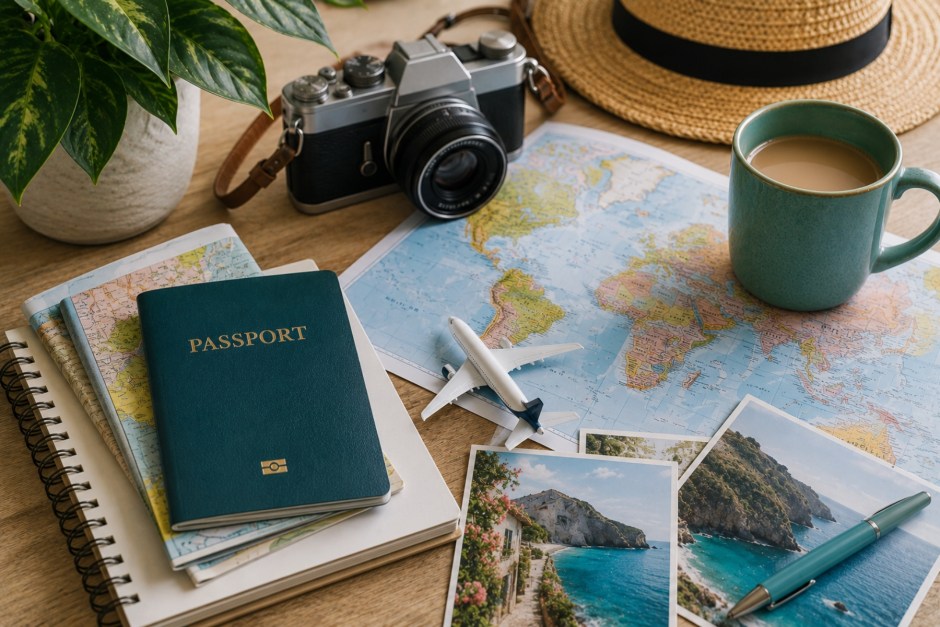
When you reserve a trip overseas, there’s a certain type of optimism that strikes you. The flights are booked, the hotel is booked, and all of a sudden, the destination is tangible. However, seasoned travellers realise that clicking ‘confirm booking’ is only just as far away as the starting line. There’s a chasm between making a reservation and being truly prepared for an overseas journey, and it will take more than just a trip to fill it.
The Paper Trail Nobody Warns You About
Your passport is obvious. Visas, for many destinations, are at least on the radar. But documents rarely end there, and for travellers heading somewhere with specific legal or administrative requirements, the paperwork situation can become surprisingly complicated, surprisingly fast.
When You Need Apostilles and Certified Translations
If you’re travelling for an extended period, studying abroad, taking up temporary employment, or dealing with anything that requires official recognition – a marriage certificate, a birth record, academic credentials – you’ll need those documents not just translated, but legally authenticated. This is where apostilles enter the picture. An apostille is a certificate of authentication recognised between countries that are signatories to the 1961 Hague Convention, and without one, a translated document may be legally useless in your destination country, regardless of how accurate the translation itself is.
Translation Alone May Not Be Enough
This distinction matters more than people realise. Getting a document translated is one thing; having that translation certified and then apostilled is an entirely separate process involving official channels that can take weeks if not handled early. If you’re planning anything beyond a short leisure trip, you’ll want to read more about what apostille authentication actually entails before assuming a standard translation will satisfy local authorities. Countries like Spain, Italy, and the UAE have strict document authentication requirements, and arriving without the right paperwork can derail everything from visa approvals to property transactions.
Start Preparing Your Documents Months in Advance. The message here is that you should begin thinking about your document needs two to three months prior to leaving for any trip involving official business, study or legal matters. For all travel, whether for business or leisure, it’s the visa on arrival, e-visa or embassy appointment that is the most consistently overlooked aspect of pre-trip planning.
Health Preparation Is Not a Checkbox
Travel medicine is often viewed as a quick trip: visit a doctor, perhaps get a prescription, get some pills at the pharmacy and go. For many places, it simply isn’t enough, and the repercussions of being underprepared can be anything from uncomfortable to serious.
Vaccinations, Timing, and Hard Entry Requirements
Some vaccines need more than one shot, which are given weeks apart. Others are not only recommended for entry, but they are also required by law. The most obvious is yellow fever. The International Certificate of Vaccination or Prophylaxis (the yellow card) is a strict requirement for travellers coming from endemic areas to countries like Kenya, Angola and other parts of West Africa as of 2026. It’s not something that you can explain away at the border. If you’re missing the certificate, you might not be able to get in or might be forced to get vaccinated at the moment, which is something you don’t want.
Beyond mandatory vaccines, destination-specific medical considerations deserve honest evaluation. Travellers spending time in rural Southeast Asia face real malaria exposure, and the decision around prophylaxis, which medication, whether it’s appropriate for your health profile, and what the regional resistance patterns look like, is one best made with a travel medicine specialist rather than a general practitioner who handles travel health as an occasional consult. Certain antimalarials cause sleep disturbances and vivid dreams in a significant portion of users; others interact with common medications. These are not trivial differences.
Travel Insurance That Actually Covers What Matters
Most travellers who purchase travel insurance fixate on trip cancellation coverage. Losing a non-refundable flight is a concrete loss, so this instinct is understandable. But the more consequential protection is medical, specifically emergency medical evacuation. In countries without a high-quality public healthcare infrastructure, reaching a facility capable of treating a serious condition can cost tens of thousands of dollars out of pocket. Standard credit card travel insurance frequently caps medical coverage well below what a genuine emergency evacuation requires.
Before departure, read the actual policy document rather than the summary. Understand whether pre-existing conditions affect your coverage, and confirm that the emergency assistance number functions internationally. Know the difference between policies that pay upfront versus those that require you to pay and seek reimbursement later. In the middle of a medical emergency in a foreign country, that distinction becomes very concrete, very quickly.
Managing Money Without the Tourist Tax
The rates at airport currency exchange counters are always 10-15 per cent lower than the mid-market rate. Not a stretch of the imagination. It’s a phenomenon that has been documented in all major international hubs. For most places in 2026, the best choice will be to use a no-fee debit card or credit card with a little local money from your home bank or ATM. If you are travelling, inform your bank of your travels, not out of any obligation, but because if you have an unwanted card block in a country where you cannot speak the language, outside banking hours, that is a problem you don’t need.
Understanding the local financial landscape also helps. Japan and Germany remain notably more cash-dependent than many travellers expect, while countries like Sweden and the Netherlands have largely moved to card-only transactions even for small purchases. Knowing this in advance isn’t just convenient. It shapes how much physical currency you need to carry, and where.
Conclusion
Preparation for international travel ultimately comes down to a fundamental shift in thinking: the trip doesn’t begin when you land. It begins when you decide to go. Travellers who arrive genuinely ready, not scrambling over documents or improvising on things that could have been resolved weeks earlier, are the ones who gave themselves enough runway. Documents, health logistics, and financial groundwork: none of this is glamorous to organise, but each one has a way of becoming very dramatic when it goes wrong somewhere you’ve never been before.
Discover more from Travel Vixta
Subscribe to get the latest posts sent to your email.