
Taking a flight is usually an exciting time – most people are heading somewhere they’ve been looking forward to. But for some, the experience comes with an unwelcome side effect: airplane ear.
I get it myself. My ears regularly pop and go blocked or muffled during flights, especially on take-off and landing. I even notice it in the car on steep hills! Fortunately, a forced yawn usually does the trick. I’ve never had it continue beyond the flight – but I did once experience really severe ear pain during a skydive, which completely ruined the experience. Pressure changes don’t just affect planes, and when it’s bad, it’s really bad.
The good news is there’s plenty you can do to prevent airplane ear or ease it when it hits. Here’s everything you need to know.
What is airplane ear?
Airplane ear – sometimes called ear barotrauma or barotitis media – is discomfort or pain in the ear caused by pressure changes in the aircraft cabin during take-off and landing.
Inside your ear is a small passage called the Eustachian tube, which connects the middle ear to the back of the throat. Its job is to equalise the pressure on either side of your eardrum. When cabin pressure changes rapidly, the Eustachian tube can struggle to keep up, which creates an uncomfortable pressure imbalance.
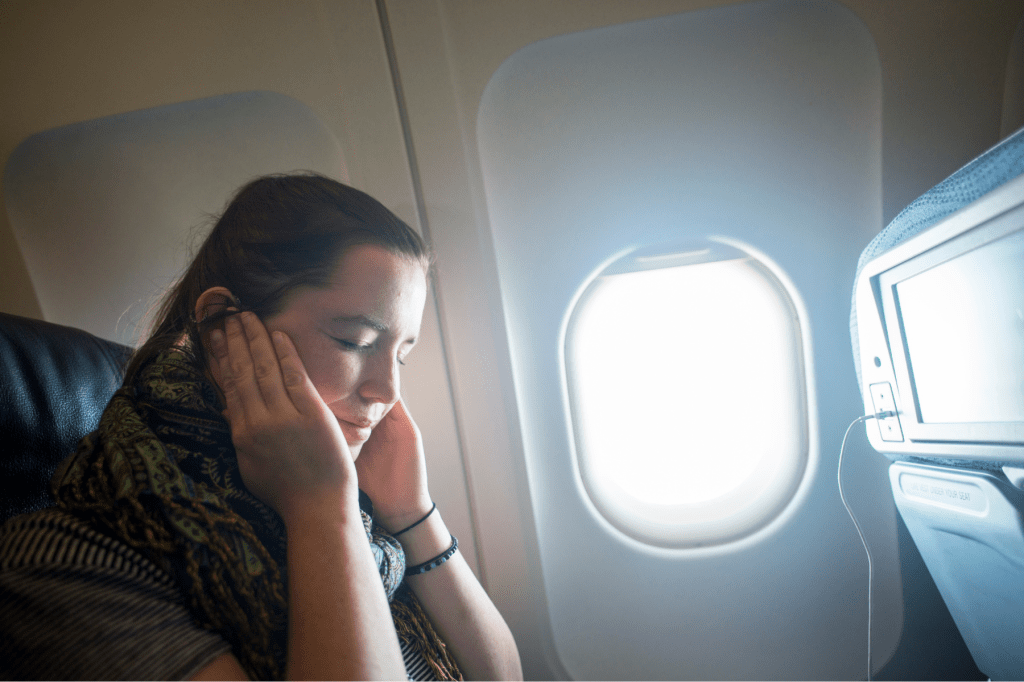
This can feel like your ears are blocked or full, sound becomes muffled, or you experience pain that can range from mild to intense. You might have felt something similar when driving up or down a steep hill quickly – that sudden pop or blocked sensation is the same thing.
For most people, airplane ear resolves on its own – either during the flight or shortly after landing. But for some, the symptoms can persist for days or even weeks. If your ears are still blocked or painful more than a few days after flying, it’s worth speaking to your GP.
How to prevent airplane ear before and during your flight
Luckily there are lots of simple ways to help prevent airplane ear. Here are some of the most common, including many of the methods I use to prevent blocked and painful ears for me, my husband and my children:
Remove ear wax before flying
If you’re prone to ear wax build-up, getting your ears professionally cleared before a flight is one of the best things you can do. A build-up of wax can intensify the pressure felt in the ears when flying and make airplane ear significantly worse.
Microsuction is the safest and most effective method – it’s quick, comfortable, and you can fly straight after. An ear care specialist can assess whether you need it before you travel. If you know your ears need attention, don’t leave it until after you’ve booked – flying with heavily waxed ears can be genuinely painful.
Stay awake during take-off and landing
This one matters more than people realise. If you’re asleep when the pressure changes, you can’t do anything to help your ears equalise. Try to stay awake and alert during take-off and landing so you can use the techniques below as soon as you feel any pressure building.
Yawn
A forced yawn is my go-to method and it works surprisingly well. Yawning activates the muscles that open the Eustachian tube, which helps the pressure equalise quickly. If you don’t feel a natural yawn coming, try mimicking one – even a fake yawn can do the job.
Swallow
Swallowing works in the same way as yawning and is just as effective. I always keep water to hand on a flight for this reason – taking regular sips during take-off and landing keeps you swallowing without having to think about it.
Chewing gum or sucking on a hard sweet works brilliantly too, which is why taking sweets for take-off and landing is such a classic travel tip. For children especially, having snacks and drinks at these moments makes a huge difference – it keeps them swallowing without them even realising it.
Try the Valsalva manoeuvre
The Valsalva manoeuvre is one of the most effective techniques for relieving ear pressure. Pinch your nostrils closed, close your mouth, and then gently blow as if you were blowing your nose – but don’t blow hard. You should feel a small pop as the pressure equalises.
Be gentle with this one. Blowing too hard can cause further discomfort, so use light, steady pressure.
Try the Toynbee manoeuvre
The Toynbee manoeuvre is a gentler alternative that works well if the Valsalva feels too forceful. Pinch your nostrils closed, close your mouth, and then swallow. The combination of the closed nose and the swallowing action helps move air through the Eustachian tube more gently.
Both manoeuvres are named after physicians – Antonio Valsalva and Joseph Toynbee – and both work by manipulating pressure in the Eustachian tube, just through slightly different mechanisms. The Valsalva pushes air through, while the Toynbee uses swallowing to encourage the tube to open naturally. It’s worth trying both to see which works better for you.
Use specialist ear plugs
There are ear plugs specifically designed for flying that help regulate the rate of pressure change reaching the eardrum. Unlike standard ear plugs, they don’t block sound – they slow the pressure change down, giving the Eustachian tube more time to adjust. Brands like EarPlanes are widely available and worth keeping in your hand luggage if you’re prone to airplane ear.
Avoid flying with these conditions
If you can reschedule, it’s worth knowing that certain conditions can make airplane ear significantly worse:
- A common cold or flu
- Sinusitis
- Nasal congestion
- An active ear infection
- Recent ear surgery
Flying with any of these can intensify the pressure imbalance and make ear pain much more severe. If you have to fly, a decongestant can help (see below).
Use a decongestant
Taking an oral decongestant around 30 minutes before your flight can help reduce nasal and Eustachian tube congestion, making it easier for pressure to equalise. A nasal decongestant spray used before and during the flight can also help.
If you’re flying with a cold or congestion and can’t postpone, this is particularly worth considering. Always follow the dosage instructions and check with a pharmacist if you’re unsure what’s suitable for you or your children.
What to do if your ears are still blocked after the flight
This is the question a lot of people have and it rarely gets answered. If your ears are still muffled or blocked after landing, don’t panic – it’s very common and usually resolves within a few hours to a day or two.
In the meantime, the same techniques that help during the flight can help afterwards too. Try yawning, swallowing, and the Toynbee manoeuvre regularly. Steam inhalation can also help loosen any congestion that’s contributing to the blockage. Staying hydrated helps too.
Avoid sticking anything in your ear to try to clear it, and don’t blow your nose forcefully – this can make things worse.
If your ears are still blocked, muffled, or painful after a few days, or if you have significant hearing loss or pain, speak to your GP. Occasionally airplane ear can cause more persistent issues that need treatment, but for most people it resolves on its own with a little patience.
How long does airplane ear last?
For most people, the blocked or muffled feeling clears within a few hours of landing – often during the descent itself. In some cases it can persist for a day or two, particularly if you were already congested before flying.
In rarer cases, symptoms can last longer. If yours haven’t improved after a few days, it’s worth getting checked out rather than waiting it out.
Tips for children and babies
Children are more prone to airplane ear than adults because their Eustachian tubes are narrower and less efficient at equalising pressure. The same principles apply, but the approach is slightly different.
For babies and toddlers, breastfeeding, bottle feeding, or giving a dummy during take-off and landing encourages swallowing and helps equalise pressure naturally. For older children, sweets, chewing gum, and drinks work well. Keep snacks and a drink within reach for both take-off and landing, not just one or the other.
If your child is prone to ear pain on flights, speak to your GP or pharmacist before travelling for advice on whether a children’s decongestant is appropriate.
Final thoughts
Airplane ear is one of those things that’s easy to manage once you know what to do. A forced yawn, a sweet to suck on, water to sip, and staying awake for take-off and landing covers most situations. Having specialist ear plugs in your bag is good insurance too if you know you’re prone to it.
And if your ears don’t clear straight after landing, give it a little time – for most people it sorts itself out. If it doesn’t, your GP is the right next step. Don’t let the worry of airplane ear put you off flying with your family – a bit of preparation goes a long way.
Discover more from Travel Vixta
Subscribe to get the latest posts sent to your email.
Very helpful, thank you. I didn’t realise it could be exacerbated by congestion, but it makes sense!